
Why Sugar & Fats Matter
Understanding texture, moisture, richness & flavour in baking.
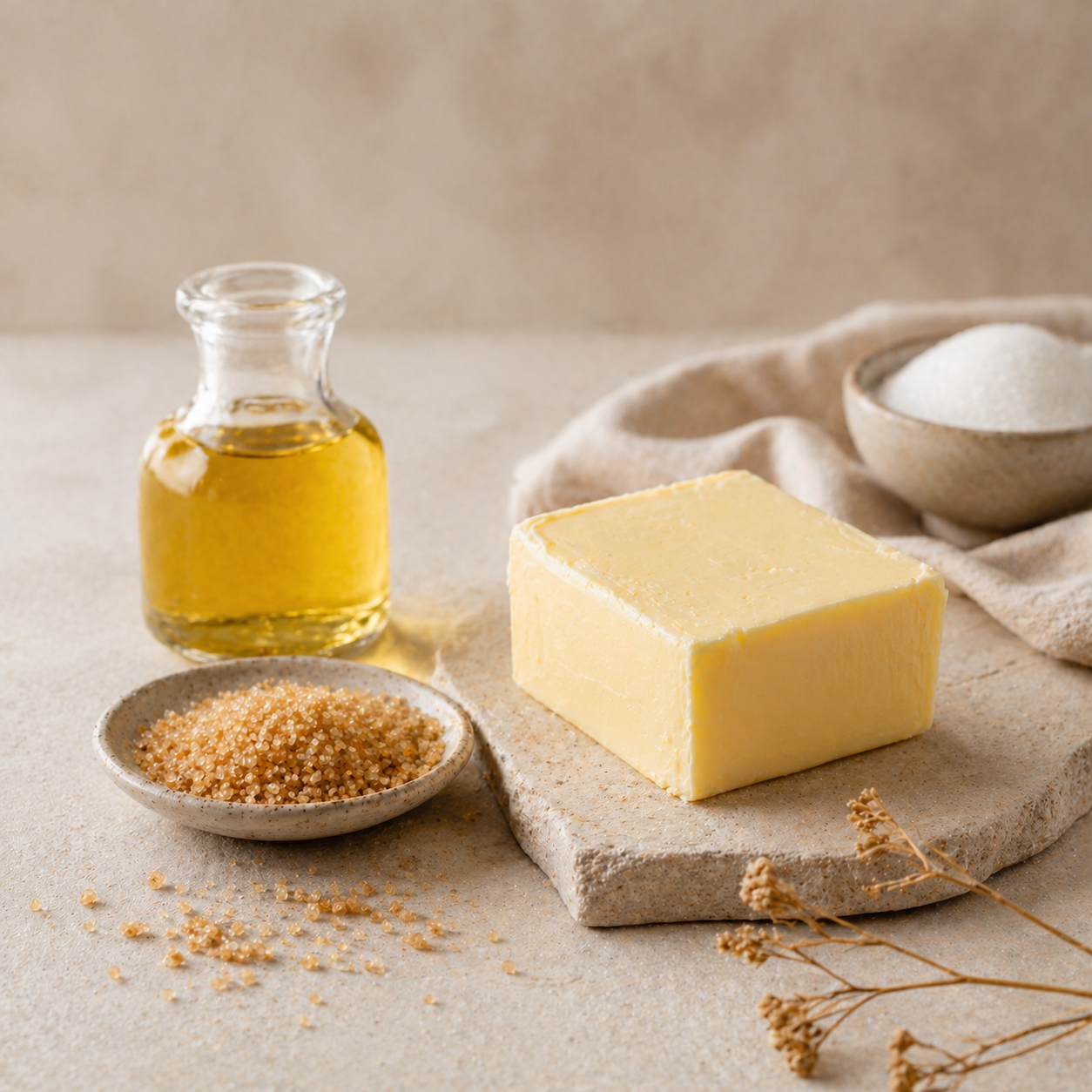
Intro
Great baking is about balance.
Sugar and fats do far more than add sweetness or richness — they shape the texture, colour, moisture, and overall feel of every bake. From soft cakes to chewy cookies, these ingredients quietly do some of the most important work in the recipe.
Understanding how they behave helps you bake with more confidence and consistency.
The Role of Sugar
Sugar is not only for sweetness. It affects the structure and finish of your bake in several ways.
1. Sweetness
Adds flavour and balance.
2. Moisture Retention
Helps baked goods stay softer for longer.
3. Tender Texture
Slows gluten development, creating a softer crumb.
4. Colour & Caramelisation
Encourages browning and golden edges.
5. Spread
In cookies, sugar melts and helps determine spread.
Types of Sugar
Fats add tenderness, richness, and mouthfeel. They also help carry flavour and create soft textures.
1. Granulated Sugar
The most common baking sugar.
Ideal for cakes, cookies, and everyday baking.
2. Brown Sugar
Contains molasses, adding moisture, softness, and a deeper flavour.
Best for chewy cookies, brownies, and rich bakes.
3. Caster Sugar
Finer crystals that dissolve quickly.
Ideal for lighter cakes, meringues, and delicate batters.
4. Icing Sugar
Very fine powdered sugar.
Used for frostings, glazes, dusting, and smooth finishes.
The Role of Fats
Fats add tenderness, richness, and mouthfeel. They also help carry flavour and create soft textures.
1. Tenderness
Coats flour and reduces gluten formation.
2. Moisture
Keeps bakes soft and pleasant.
3. Richness
Adds depth and luxurious flavour.
4. Aeration
When creamed with sugar, traps air for lift.
5. Flavour Carrier
Helps flavours feel fuller and rounder.
Types of Fats
Fats add tenderness, richness, and mouthfeel. They also help carry flavour and create soft textures.
1. Butter
Adds rich flavour and structure. Excellent for cookies, cakes, and pastries.
2. Oil
Creates moisture and softness. Great for loaf cakes, muffins, and sponge cakes.
3. Shortening
Neutral flavour with a tender texture. Often used in frostings and pie crusts.
4. Cream Cheese / Dairy Fats
Used for tang, richness, and creamy texture in fillings and frostings.
SCIENCE
How Creaming Works
When butter and sugar are beaten together, tiny air pockets are created. These pockets expand during baking and help create a lighter texture.
1. Beat Butter
Softened butter becomes smooth.
2. Add Sugar
Sugar crystals create tiny pockets.
3. Trap Air
Mixture becomes lighter and fluffier.
3. Bake & Expand
Air pockets grow in the oven.
Butter vs Oil
Ingredient | Best For | Result |
|---|---|---|
Butter | Cookies, cakes | Rich flavour & structure |
| Oil | Muffins, loaf cakes | Moist & soft texture |
⚠️ Common Mistakes
✖ Cold butter
Does not cream properly
✖ Too much sugar
Can weaken structure
✖ Too little fat
May turn dry
✖ Overmixing
Can affect texture
💡 Quick Tips
Measure accurately • Use room temperature butter • Cream patiently • Choose sugar wisely • Follow recipe ratios
✨ From Our Bakers
Great recipes are not just sweet or rich — they are balanced.
Understanding sugar and fats helps you control texture, flavour, and softness with intention.